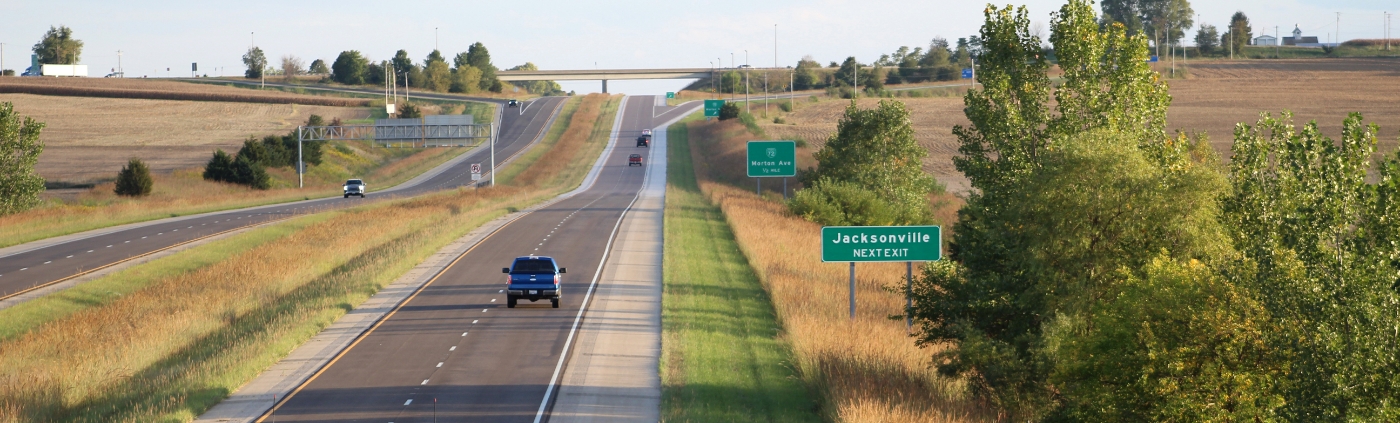

Fast access to St. Louis, Indianapolis, Chicago, Kansas City and Des Moines.

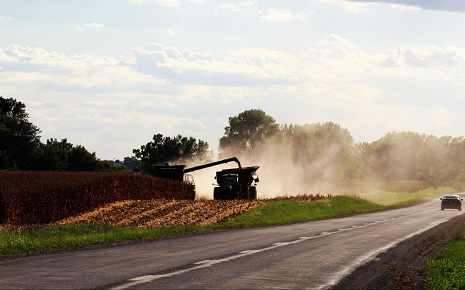
For many people, agriculture begins at the grocery store. In the Jacksonville region, it begins much closer to home.
It starts with the farms that grow corn and soybeans across Morgan and Scott counties. It continues through the seed companies developing new crop varieties, equipment dealers helping farmers adopt precision technology, businesses that transport and process agricultural products, and the schools and community organizations preparing the next generation of workers. It also reaches families who have lived and worked on local farms for generations, as well as residents who benefit from the economic activity those farms create.
Agriculture is one of the Jacksonville Region’s most important economic assets. It supports jobs, business activity, land values, tax revenue, and the broader supply chain. At the same time, the industry continues to change.
Farmers are adopting new technology, adjusting to changing weather conditions and finding more efficient ways to manage inputs. Local businesses are responding by developing new services and hiring workers with increasingly specialized skills.
These changes matter to everyone who lives in the Jacksonville Region, whether they work in agriculture or not. A strong agricultural economy supports the community today while creating opportunities for the next generation.
Illinois has long played a major role in American agriculture. Nearly 75% of the state’s land is farmland, and the state has more than 72,000 farms.
Morgan and Scott counties contribute significantly to that agricultural economy. According to the 2022 USDA Census of Agriculture (updated every five years), Morgan County has more than 750 farms covering more than 280,000 acres. Scott County has more than 250 farms covering nearly 105,000 acres.
Together, those farms account for a large share of the region’s land and economic activity. Corn and soybeans make up much of the region’s crop production, while pastureland and woodland account for additional acreage. The economic impact extends well beyond the farm.
Agriculture creates demand for equipment, seed, fertilizer, technology, transportation, financial services, insurance, construction, maintenance, and professional services. When farmers invest in new equipment, local dealerships and service providers benefit. When agricultural businesses hire employees, those workers spend money at local restaurants, stores, and other businesses.
Agriculture also supports a workforce with skills valuable across multiple industries. Equipment technicians, data specialists, mechanics, agronomists, sales professionals, truck drivers, managers, and business owners all play a role in the agricultural economy.
Agriculture has changed significantly over the past several decades, and technology is accelerating that change.
Modern farmers can use GPS-guided equipment, field mapping, computer vision, machine learning, and other tools to make decisions based on detailed information about their fields. These technologies can help farmers place seed and other inputs more accurately, monitor field conditions and identify problems sooner.
Local businesses are helping farmers put those tools to work. Burrus Seed, a regional family-owned hybrid seed supplier, continues to invest in research and development. Its work includes studying population dynamics, seed placement, and other factors that can influence crop performance.
That research reflects a broader change in agriculture. Farmers increasingly have access to more data and more options than previous generations. The challenge is determining which information can improve decisions and produce measurable results.
Local farmers are taking an active role in that process. Freeman Seed, a family-operated farm in Murrayville, uses GPS and mapping technology on its equipment. These tools help the operation apply inputs where they are needed rather than uniformly across a field.
The farm also uses John Deere’s See & Spray technology, which uses computer vision and machine learning to identify and target weeds. By applying herbicide only where it is needed, the technology can reduce input use while helping control weeds.
Technology does not replace farmers' knowledge. It gives them more information and better tools for applying that knowledge. That distinction will remain important as artificial intelligence and automation become more common in agriculture.
A modern agricultural economy requires more than people who work directly on farms.
As technology grows, agriculture needs workers who can install, operate, maintain, and support increasingly sophisticated systems. That creates opportunities for people with backgrounds in technology, mechanics, data analysis, engineering, sales, and business management.
Beard Implement shows how those workforce needs are changing. The company began in 1937 in Arenzville as a dealership selling Allis-Chalmers tractors and combines. Today, it offers advanced farming systems and GPS technology. That expansion has created a need for employees who understand both agriculture and technology.
Precision farming lets farmers monitor equipment location, fuel use, operating speed, and other data through digital tools. Farmers can use that information to manage equipment and make more informed decisions.
Supporting those systems requires skilled employees. Agriculture therefore offers career opportunities that may surprise people who have not worked in the industry. Some roles involve working outdoors or operating equipment. Others involve computers, engineering, sales, customer service, or technical support.
The region can benefit when students and career seekers understand these options. Career opportunities connected to agriculture include:
This diversity also gives agricultural businesses a reason to invest in workforce development. As equipment and technology change, employees need opportunities to learn new skills. That creates a connection between agriculture, education, and economic development.
Agriculture faces several challenges that will shape its future. Weather patterns can affect planting schedules, crop yields, soil conditions, and transportation. Drought, flooding, heat, and other extreme conditions can create uncertainty for farmers and affect prices throughout the food supply chain.
Supply chain disruptions can create additional challenges. Agriculture depends on a complex network that moves seed, fertilizer, equipment, fuel, and finished products. Delays or shortages in one part of that network can affect businesses and consumers far beyond the farm.
Farmers also face pressure to manage costs while maintaining productivity. These challenges make innovation and sound decision-making increasingly important. Farmers need access to reliable information, new technology, equipment, and people who can help them evaluate their options.
The Jacksonville Region already has many of those resources. Local agricultural businesses understand farmers' needs because they work with them every day. Organizations such as the Cass-Morgan Farm Bureau also connect agriculture with the broader community through education, events, and advocacy.
The Farm Bureau’s Ag in the Classroom program introduces students to agriculture through farm tours, educational activities, and teacher resources. Programs like these can help young people understand where food comes from and how agriculture supports the local economy.
They can also introduce students to potential careers. Building that awareness early can help the region maintain a workforce capable of supporting agriculture as the industry changes.
The future of agriculture in the Jacksonville Region will depend on farmers, businesses, workers, educators, and community leaders' ability to adapt.
That work is already happening.
Farmers are testing new technologies. Seed companies are researching new crop varieties. Equipment dealers are expanding their technical capabilities. Community organizations are educating residents. Employers are seeking workers with new skills.
Economic development helps connect these efforts. A strong agricultural economy can help Jacksonville attract businesses that depend on agricultural production, transportation, and related services. It can also support entrepreneurs who see opportunities to develop new products and services for farmers.
For residents, agriculture provides another important benefit: a direct connection to the region’s identity and economy.
The farms surrounding Jacksonville are working businesses. They are part of a larger system that includes employers, families, schools, service providers, and local institutions. Supporting that system does not mean keeping agriculture unchanged. The industry will continue to evolve, just as it has throughout its history.
The Jacksonville Regional Economic Development Corporation helps businesses and organizations find the information and resources they need to make informed decisions.
For agricultural businesses, agribusinesses, and companies considering expansion in the Jacksonville Region, JREDC can provide information related to available sites and buildings, workforce data, financing and incentives, taxes, demographics, traffic counts, retail sales, economic indicators, zoning, and other community data.
Whether you are an agricultural business considering an expansion, an entrepreneur exploring a new opportunity, or a resident interested in the region’s economic future, JREDC can help connect you with the information you need.




Community Guide is Available
The City of Jacksonville is located in west central Illinois, 35 miles west of Springfield, the state capital. It is the county seat of Morgan County and one of the oldest towns in the Land of Lincoln, founded in 1825. Jacksonville was established by Yankee settlers from New England, who laid out farms, constructed roads, erected government buildings, and established post routes. They were part of a wave of European/American farmers who headed west into what was then the wilds of the Northwest Territory, during the early 1800s. Download Here!